Software

- 18 Mar, 2026
- 313 Views
- 0 Comment
Table of Contents
-
Key Steps for a Successful Software Product Launch
-
Common Mistakes to Avoid
-
Software Product Lifecycle Process
-
Marketing Your Software Launch
-
AI Product Development Considerations
-
Final Thoughts
Launching a software product is a critical milestone for any business. It transforms your idea into a real, usable solution. However, many software products fail due to poor planning, lack of market understanding, or technical gaps.
At CodeLab Tanzania, we help businesses across Tanzania build, launch, and scale high-performing software solutions. This guide outlines proven strategies to ensure your software launch is successful, scalable, and aligned with market needs.
.webp)
Key Steps for a Successful Software Product Launch
1. Build a Strong Foundation
Focus on Value, Not Just Features
Avoid overloading your product with unnecessary features. Instead, identify real user problems in the Tanzanian market and build solutions that directly address them. A focused product delivers more impact and better adoption.
Use Agile Software Development
Agile development allows for fast iteration and continuous improvement. Start with a Minimum Viable Product (MVP), gather user feedback, and refine your solution before full deployment.
Encourage Team Collaboration
Successful software development requires close collaboration between developers, designers, QA engineers, and product managers. This ensures a seamless, user-friendly product.
Manage Technical Risks Early
Identify potential risks such as scalability, system integration, and performance issues. Planning ahead helps avoid costly failures during and after launch.
Automate Testing and Deployment
Implement CI/CD pipelines and automated testing to improve efficiency, reduce errors, and maintain high-quality code throughout development.
Set Up Monitoring Systems
Once your product is live, real-time monitoring, logging, and backup systems are essential to ensure stability and quick issue resolution.
2. Define Clear Launch Goals
Before launching, understand your purpose. Most businesses in Tanzania launch software to:
-
Solve specific customer challenges
-
Generate new revenue streams
-
Improve operational efficiency
-
Leverage modern technologies
-
Expand into new markets
Clear objectives guide your product strategy and improve decision-making.
Common Software Launch Mistakes to Avoid
Many software projects fail due to avoidable errors:
-
Poor Requirements Definition – Misalignment with user or business needs
-
Weak Unique Value Proposition (UVP) – Lack of clear differentiation
-
Insufficient Testing – Bugs and performance issues at launch
-
Scope Creep – Uncontrolled feature expansion causing delays
-
Ignoring Scalability – Systems that fail under growth
-
Lack of User Feedback – Missing real-world insights
Avoiding these pitfalls increases your chances of a successful launch.
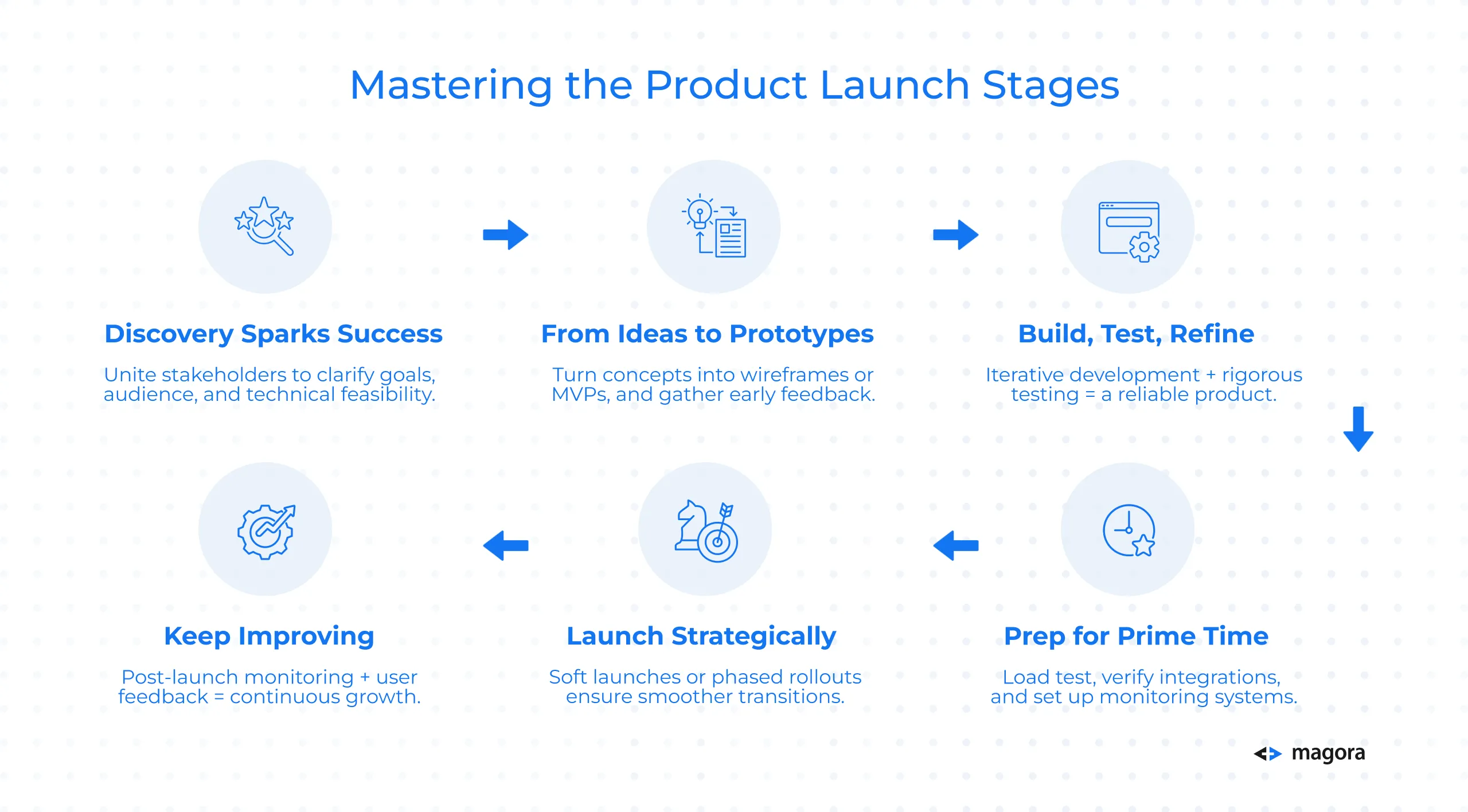
Software Product Lifecycle: Step-by-Step Process
At CodeLab Tanzania, we follow a structured software development lifecycle to ensure success:
1. Discovery & Ideation
Define your product vision, target audience, and business goals. Conduct feasibility analysis to validate your idea early.
2. Planning & Prototyping
Create wireframes or MVPs to visualize the product. Early testing ensures you are building what users actually need.
3. Development & Testing
Develop the product in iterations while conducting:
-
Unit testing
-
Integration testing
-
Performance testing
This ensures reliability and quality.
4. Pre-Launch Preparation
Prepare your system for real-world use:
-
Load testing
-
API integration checks
-
Infrastructure readiness
5. Product Launch
Deploy your software using a phased or full release strategy. A soft launch can help identify issues early.
6. Post-Launch Optimization
Monitor performance, gather user feedback, and continuously improve your product for better results.
How to Market Your Software Product in Tanzania
Even the best software needs strong visibility. Effective marketing strategies include:
-
Pre-Launch Campaigns – Build anticipation through demos and teasers
-
Beta Testing Programs – Engage early users and gather feedback
-
SEO & Content Marketing – Target Tanzanian search queries
-
Developer Resources – Provide API documentation for integrations
-
Social Media & Digital Ads – Reach your target audience effectively
AI-Based Software Development: Key Considerations
AI-powered solutions are growing in Tanzania, but they require careful planning:
Data Privacy & Compliance
Ensure compliance with global standards like GDPR when handling sensitive data.
Bias Detection
Train AI models responsibly to avoid unfair or inaccurate outcomes.
Explainable AI
Provide transparency so users understand how decisions are made.
Scalable Infrastructure
AI systems require strong infrastructure to handle large datasets efficiently.
Final Thoughts
A successful software product launch is not just about releasing a product—it’s about delivering real value to users and ensuring long-term growth.
Partnering with an experienced software development company like CodeLab Tanzania gives you a competitive advantage. From idea validation to development, launch, and scaling, we help businesses across Tanzania build reliable, scalable, and high-performing digital solutions.